
Gutter and downspout repair in St. Charles
A run that sags in the middle, a hanger backing out of the fascia, a corner that drips, a downspout that empties into a buried pipe and goes nowhere. Each one gets worse with every storm, and most are a short fix when they are caught early.
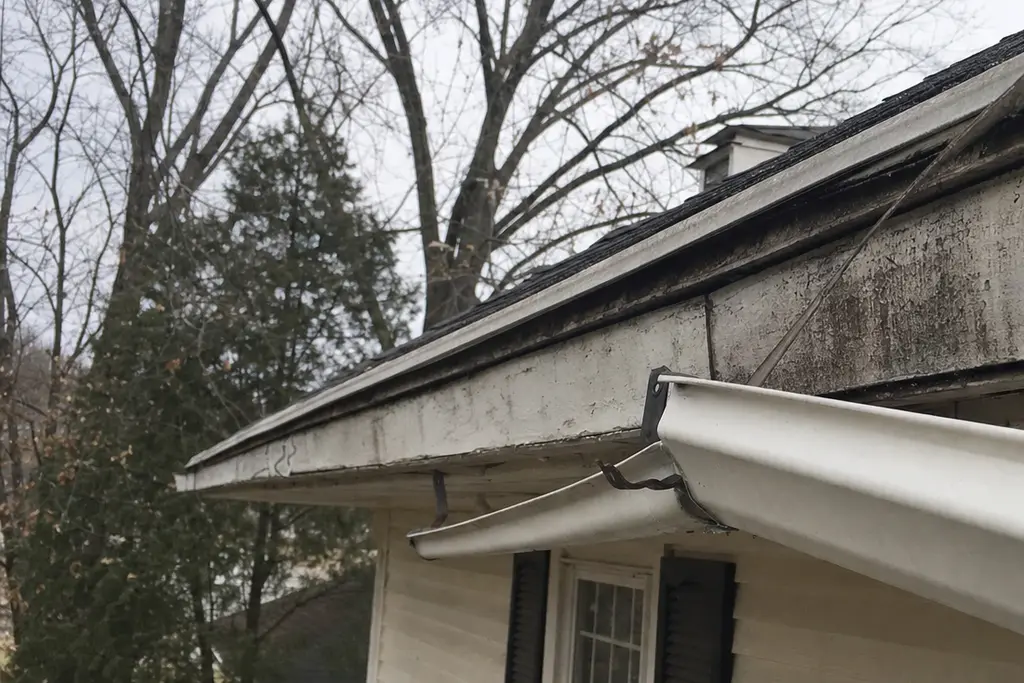
Gutter sagging or pulling away from the fascia
On many St. Charles houses from the 1970s and 1980s the gutters still hang on long spikes driven through the gutter into the fascia board, one every couple of feet. After 30 or 40 years of wet leaves sitting in the channel, the spikes work loose, the wood around them softens, and the run leans forward and sags between the ones still holding. Water then runs behind the gutter instead of into it, and that is how a fascia board and the soffit under it rot.
The usual fix is to pull the spikes and re-hang the run on screw-in hidden hangers, spaced closer, driven into solid wood, with the pitch reset toward the downspout. Where the fascia has gone soft, that piece is replaced first, since a gutter hung back on rotten wood sags again a few feet down the eave.
A re-hung and resealed run typically comes to $150-$375; the gutter repair prices page covers what moves that number.
Gutter seams and corners that drip
Sectional gutters, the kind sold in ten-foot lengths, leak at the joints. Seamless gutters leak at the corners and the end caps, where the sealant dries out after enough summers and lets go. A drip at one corner usually means failed sealant rather than a failed gutter. The joint gets cleaned down to bare metal, re-riveted if it has spread, and sealed again.
A run with drips at several joints and rust between them has reached the point where gutter replacement costs less over the next ten years than chasing one seam at a time. The note from a cleaning will tell you which kind of run you have.
Gutters overflowing in a heavy rain when they are clean
St. Charles gets about 45 inches of rain a year, with spring the wettest season, and a lot of it comes in hard storms rather than a steady soak. A gutter that spills over the front in those storms but not in a steady rain usually has one of these problems:
- The pitch is off. A run that has sagged in the middle holds water there and spills before the downspout sees it.
- One downspout is doing the work of two. A long ranch eave with a single downspout at the far end cannot drain fast enough; a second downspout, or a bigger one, fixes it.
- A roof valley dumps on one corner. Where two slopes meet, the water comes down in a sheet and shoots past the gutter. A short splash guard at that corner keeps it in.
Rule out the simple cause first. A gutter that overflows while it is packed with spring seed needs gutter cleaning, and the pitch question can wait until it is empty.
Downspout clogged underground
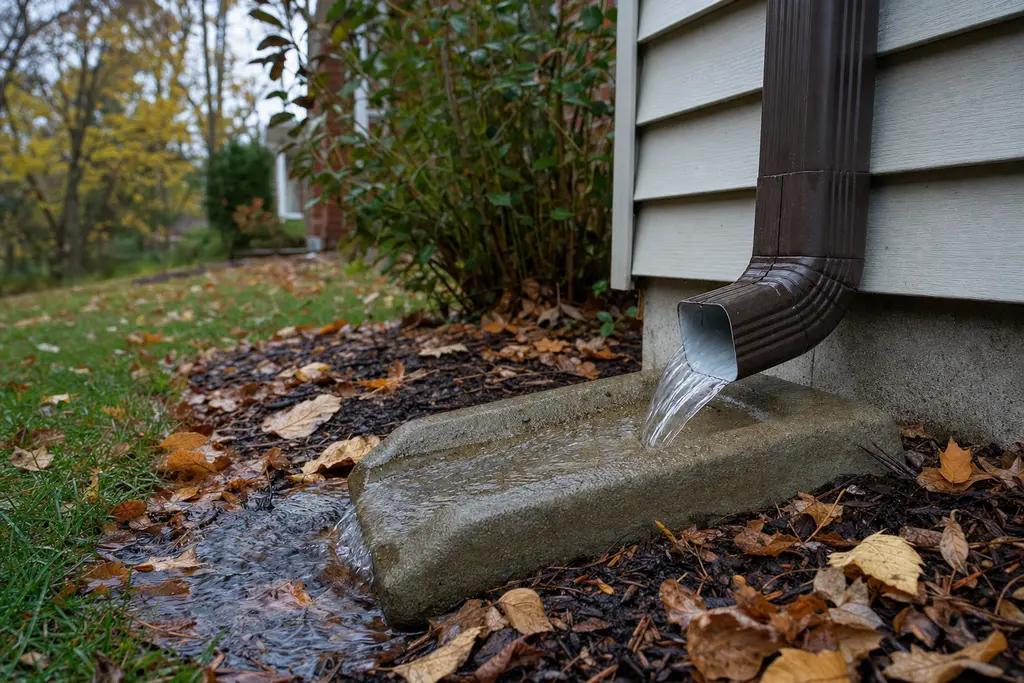
A common setup on St. Charles lots from the 1980s and 1990s is a downspout that empties into a buried pipe, usually black corrugated plastic, that runs under the lawn to the curb or a pop-up outlet in the yard. When that line packs with leaves and shingle grit, the downspout backs up, the gutter overflows at that corner, and the water ends up against the foundation instead of out at the street.
Clearing it means running water and a drain snake from the downspout end until it comes out the other side. Most lines open up, and flushing one during a cleaning typically adds $50-$125 per drain. A line that is crushed, full of roots or broken somewhere under the yard does not open, and the honest answer is often to cut it off at the surface and send the downspout to a splash block or an extension that carries the water well away from the house.
If the same downspout clogs every fall under one big tree, a guard on that run may be worth it. The gutter guards page covers when it is and when it is not.
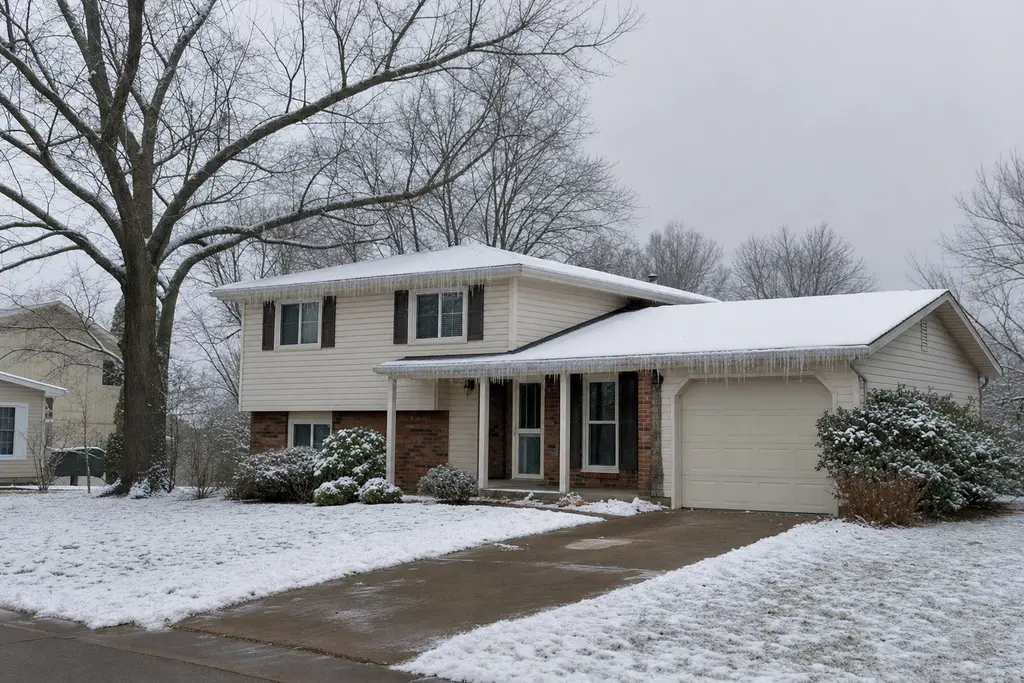
Ice at the gutter line after a cold snap
Some St. Charles winters bring a stretch where snow melts on the roof by day and refreezes at the cold eave by night. On older ranches and split-levels with thin attic insulation, a ridge of ice can build along the gutter and hang icicles off the front. The weight pulls on the hangers, and meltwater backed up behind the ice can work under the shingles.
What a repair can do after a winter like that is re-set the hangers the ice pulled, straighten or replace a run that kinked, and check the downspouts that froze. The cause is warm air reaching the underside of the roof, and that is work for an insulation contractor.
Repairs are handled the same way across St. Charles County, from the old streets near the river to the newest subdivisions out west.
Tell us what the gutter is doing
Say what you are seeing: the sag, the drip, the corner that spills, the downspout that will not drain. A photo helps once the pro calls.
Or call (636) 246-0608. You reach a person, or you get a fast call back.
What people ask before a gutter repair
Is a sagging run a repair or a new gutter?
Most can be fixed. A run that sags because its spikes backed out gets re-hung on screw-in hangers set into solid wood. It is a replacement when the metal itself has split, rusted through or kinked, or when the run sags on a long stretch of soft fascia.
Is the problem my gutter or the fascia board behind it?
Push gently on the wood just under the roof edge where the gutter sags. If it is firm, the gutter needs re-hanging. If it is soft or flaking, water has been running behind the gutter for a while, and that piece of fascia gets replaced before the gutter goes back up.
Why does my downspout back up in a storm when the gutter is clean?
On a house where the downspout goes into the ground, the usual suspect is the buried line, packed with leaves and grit, crushed, or disconnected under the lawn. Flushing it from the top tells you which. One that opens stays in use; one that will not gets rerouted to a splash block or an extension.
Can gutters someone else installed be repaired?
Yes. Most repair calls in St. Charles are on gutters that came with the house, put up by a builder decades ago. Matching the old profile and color is part of the job.